Lampita Silaban - Egao Coffee
From Seedlings to Self-Belief: How Coffee Is Changing Women's Lives in North Sumatra
In the highlands of Humbang Hasundutan, North Sumatra, coffee has always grown well. What hasn't always grown as easily is the belief that women belong at the center of that story.
That's what project leader Lampita Silaban set out to change with the Egao Coffee program — a grassroots initiative that pairs practical farming skills with something just as vital: the confidence for women to see themselves as leaders, entrepreneurs, and equal partners at home.
Planting More Than Coffee
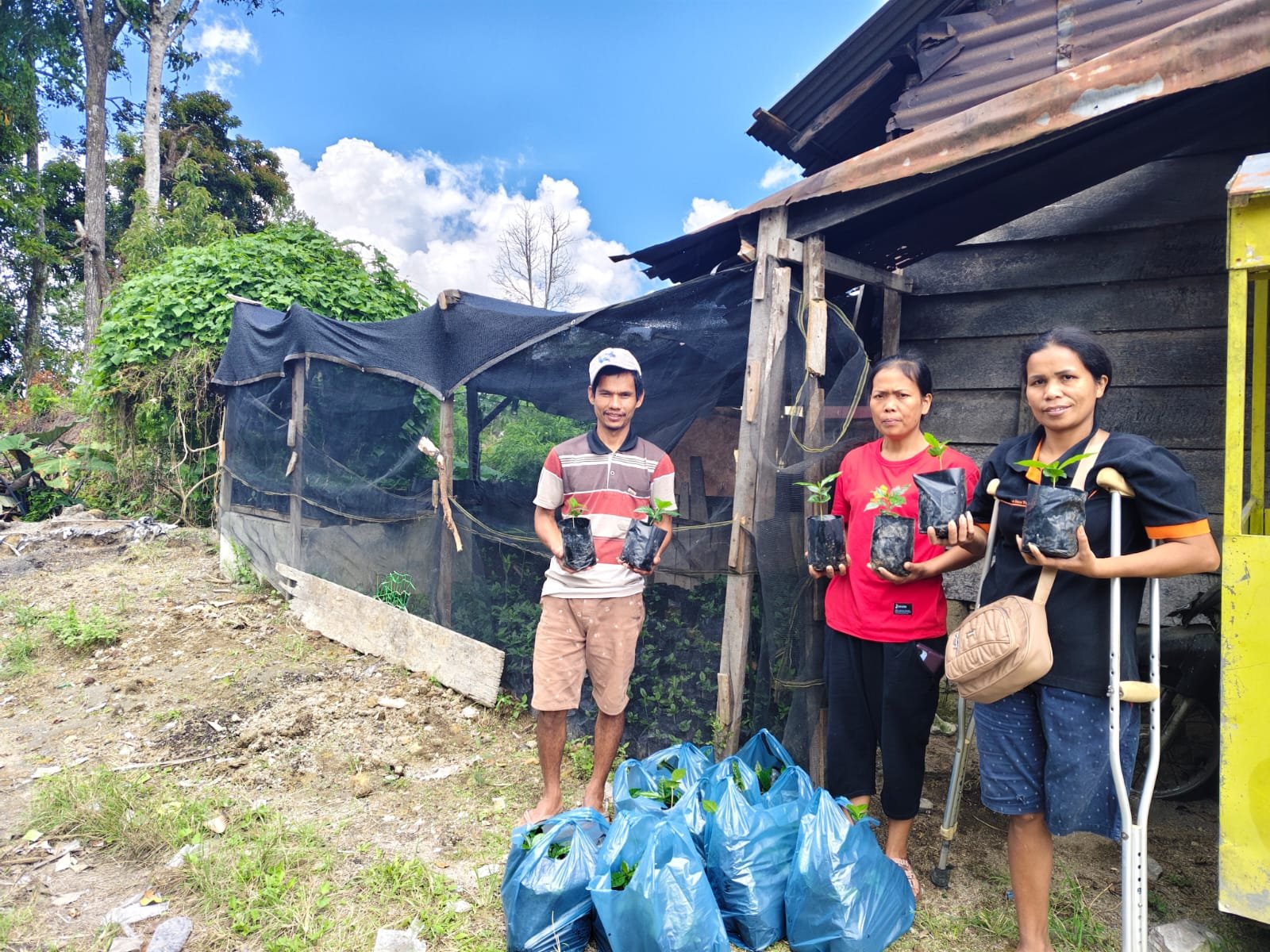
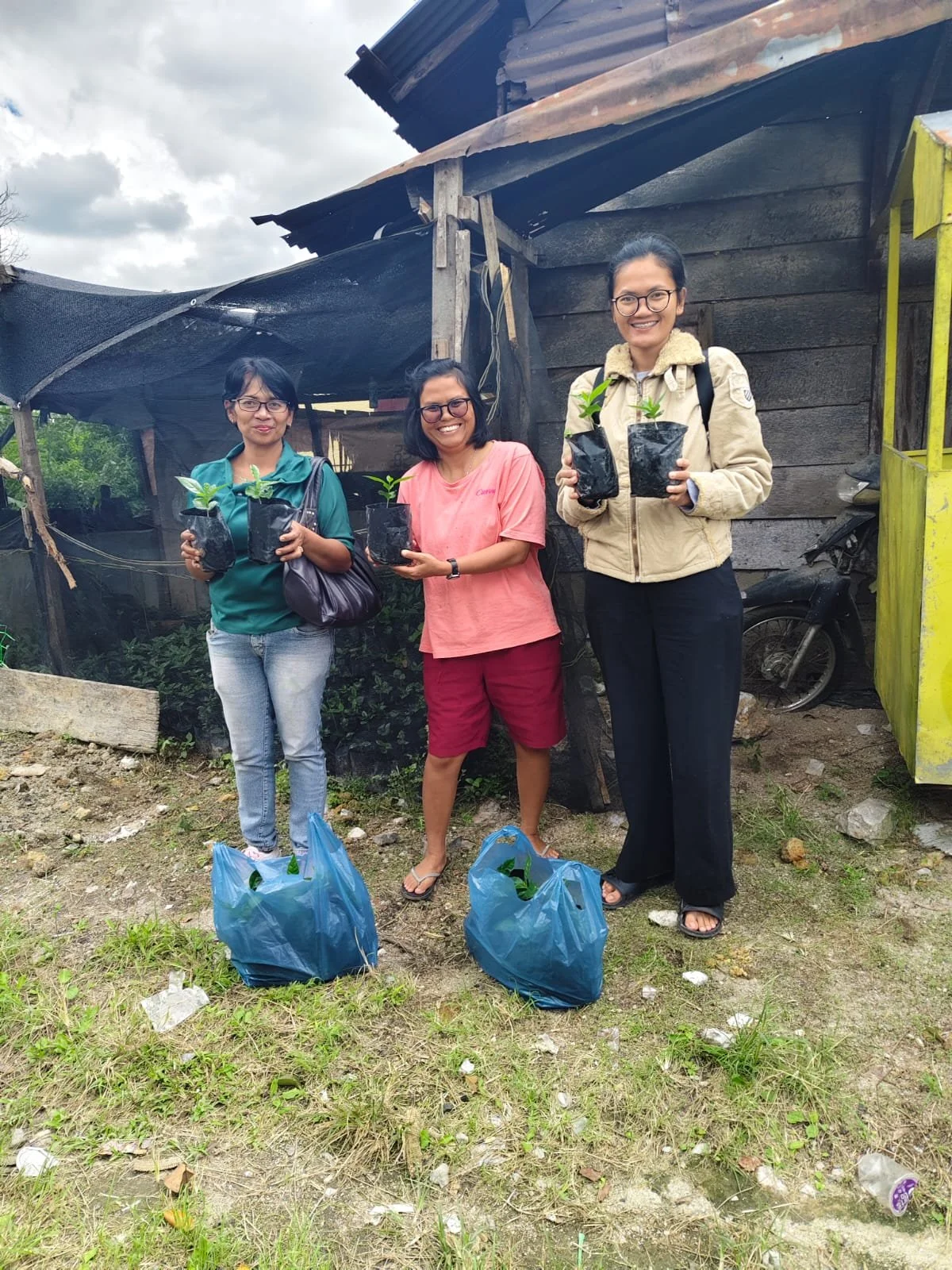
Over two training phases, 16 women returned to the Coffee School in Lintong Nihuta Village to deepen skills they'd started building months earlier. Each woman received 120 coffee seedlings — Arabica Ateng Super and Komasti varieties — along with non-invasive Lamtoro shade trees to protect their new plants and enrich the soil.
But the real innovation was in how the training connected the dots between land, livelihood, and household life.
Women learned to brew eco-enzyme, a simple fermented liquid made from fruit peels, sugar, and water, that doubles as an organic fertilizer, natural pesticide, and household cleaner — cutting both costs and chemical exposure. They studied coffee cultivation from seedling to harvest, learning to read their own land, choose the right varieties, and manage pests naturally using neem, turmeric, ginger, and betel leaf.
And they talked — openly, sometimes for the first time — about gender equality. About who gets to lead, who gets to rest, and who gets to dream.
Coffee Cups Full of Change
The ripple effects reached straight into these women's homes. Husbands who once left the coffee-making to their wives started brewing their own cups. Several began stepping in to run family coffee stalls so their wives could attend training — a small shift that speaks to something much bigger: the slow easing of the "double burden" so many rural women carry alone.
Out of the original participants, six women found the courage to open their own coffee stalls and snack businesses. Others found unexpected new confidence in their communities — asked, and trusted, to serve coffee to guests at church gatherings and homestays.
Three Women, Three Stories of Growth
Mrs. Surta, who lost her leg in an accident years before she married, never let that slow her down — she farmed, traded, and sewed to get by. Through the program, she learned to bake sponge cake and make ice pops using an oven she'd dreamed of owning for years. Her coffee farm grew from 50 to 170 plants. "This project has been meaningful to me," she says, "especially for increasing my family's income and my knowledge of organic coffee farming. I hope other women can join, too."
Mrs. Linda grew up in the city and never imagined a life on a coffee farm. Before the project, she says she simply "took care of the children and husband," with no path to contribute financially. Now she processes and packages coffee, bakes traditional cakes, and confidently caters meals for visiting guests — turning what used to feel impossible into steady income and standing in her community.
Mrs. Lenny Uli Manik managed a small church homestay but used to feel too unsure of herself to serve coffee to visitors. She'd also spent heavily on chemical fertilizer and sold her harvest unprocessed, earning little for her work. Today, with a coffee-hulling machine from the program in hand, she processes her own beans and serves coffee with pride after every church service. "We women are increasingly empowered and trained to be confident pillars of our families," she reflects.
Roots Still Growing
The road hasn't been without obstacles. Deep-rooted ideas about who should lead — and who should stay home — haven't disappeared overnight, and access to startup capital remains a real barrier for women ready to grow their businesses further.
But something has clearly taken root alongside the coffee seedlings: a quiet, steady shift in how these women see themselves, and how their families and communities see them too.
As Lampita and her team look ahead, the hope is simple — that this work continues, that more women get the chance to join, and that the seeds planted today keep growing for years to come.
The Egao Coffee program is led by Lampita Silaban with support from SowHope, and draws on the expertise of Asian Rural Institute alumni Mr. Muntilan Nababan, Mr. Gani Silaban, and Mr. Junpiter Pakpahan.